

This post is part a Bucharest travel guide, part an invitation to explore Romania’s capital beyond the headlines and into its hidden corners.
Bucharest is a city that surprises you. Often misunderstood, it’s a place where Belle Époque mansions whisper stories from a glamorous past — while street art, traffic buzz, and vibrant cafés pulse with a modern rhythm. You’ll walk past bullet-scarred buildings that still echo 1989’s revolution and turn a corner to find a lush urban garden blooming in silence.
I lived here for more than a decade, from 1990 to 2002 — a time when the city was still shaking off the dust of a complicated past and trying to reinvent itself. Then I moved an ocean away. But every summer, I return. And each time, Bucharest feels both changed and familiar, like an old friend with new stories.
What you must visit
📸 Old Town
Lipscani, Bucharest’s Old Town, is where the city feels most alive. You’ll find winding pedestrian streets, faded merchant facades, lively cafés, and music spilling out of tucked-away bars. This area is full of restaurants, and in the summer, they brim with people. Hosts eagerly invite you to consult their menus, creating a warm and bustling atmosphere. There aren’t many stores here — just many places to eat, drink, and enjoy some serious people-watching.
A must-visit is Caru’ cu Bere, an iconic restaurant known for its stunning interior, traditional Romanian cuisine, and lively ambiance that captures the spirit of Old Town.
Beyond dining, Lipscani pulses with vibrant nightlife — packed with many clubs where locals and visitors dance late into the night. You’ll also find a theater nearby, adding to the cultural tapestry of this lively neighborhood.
Walk slowly — this is a place for impromptu discoveries and unexpected architectural gems.


🏛️ House of the People

The Palace of the Parliament, once a symbol of dictatorship, is one of the largest buildings in the world. It’s staggering in both scale and symbolism. Whether you admire it or not, you can’t ignore it — it’s a must-see to understand the city’s layered political past. I actually wrote about this building in my novel’s Romanian edition, Under the Iron Curtain, which I’m presently working on retranslating into English because the version published by the publishing house changed quite a bit from my original text.
Consider booking a guided tour; the interior is just as overwhelming as the outside.
The Palace of the Parliament in Bucharest is not just a building; it’s a monumental testament to ambition and excess. With 1,100 rooms and a floor area of 365,000 square meters (3,930,000 sq ft), it’s the heaviest building globally, tipping the scales at approximately 4.1 million tonnes. Wikipedia
🏗️ Fascinating Facts
- Depth and Height: The building’s depth underground matches its height above ground, extending 92 meters (302 feet) below and 86 meters (282 feet) above the surface.
- Construction Scale: Over 100,000 workers contributed to its construction, with up to 20,000 working in three shifts around the clock during peak periods.
- Materials: The palace is constructed using Romanian materials, including 1 million cubic meters of marble, 700,000 tonnes of steel and bronze, 3,500 tonnes of crystal, and 900,000 cubic meters of wood.
- Interior Grandeur: The interior boasts 480 chandeliers, 200,000 square meters of carpeting, and many rooms adorned with gold leaf and crystal, reflecting opulence at an unprecedented scale.
- Underground Network: Beneath the palace lies an extensive underground network, including a nuclear bunker linked to 20 kilometers of tunnels, originally designed for emergency evacuations.
🎟️ Visitor Tips
- Guided Tours: To fully appreciate the scale and history, it’s good to book a guided tour (typically 24 hours in advance), as the building is still in use for parliamentary functions. For individual bookings or small groups (up to 9 people), you can call the Parliament’s visiting center directly at +40 733 558 102 or +40 733 558 103, between 9:00 and 16:00. For groups of 10 or more, you can email cic.vizite@cdep.ro. The official website for the Palace of Parliament also provides information on booking and opening hours
- Identification: Visitors must show valid identification upon entry.
- Accessibility: The palace is accessible by public transport, and guided tours are available in multiple languages.
🏺 For History Lovers: The National Museum of Romanian History
History buffs will love the Trajan’s Column replica inside this museum — an astonishing tribute to Romania’s Roman roots. The museum offers insight into the country’s ancient past and its place in the Roman Empire, alongside other archaeological treasures. It’s quieter than other spots, but worth your time if you love depth over crowds.


Inside the same building, you’ll find exhibits dedicated to Romania’s communist era, including displays from the 1980s. These exhibits offer a stark contrast to the ancient artifacts, providing a glimpse into the country’s more recent and complex history. It’s a compelling stop for those interested in understanding the full spectrum of Romania’s past.
This is very close to Old Town.


🎼 Romanian Athenaeum
The Romanian Athenaeum is Bucharest’s iconic concert hall and a true architectural gem. Built in a stunning neoclassical style with a grand dome and ornate frescoes, it stands as a symbol of Romanian culture and artistic spirit. Since its opening in 1888, the Athenaeum has been home to the George Enescu Philharmonic Orchestra and hosts classical concerts, festivals, and cultural events that captivate audiences year-round.
Visiting the Athenaeum is more than just a stop on your tour — it’s an immersion into Romania’s rich musical heritage. Don’t miss the breathtaking mural inside, which depicts scenes from Romanian history and folklore, wrapping visitors in a visual story as powerful as the music itself.


Visitor Tips
- Check the concert schedule ahead of time for performances or guided tours.
- The building is located near University Square, easily reachable by public transport.
- For music lovers, catching a live concert here is an unforgettable and surprisingly an inexpensive experience.
- Nearby, don’t miss Elisabeta’s Palace, where exhibitions are sometimes held, and the Revolution Square, known for its beautiful restored buildings and historical significance.
🏡 Village Museum
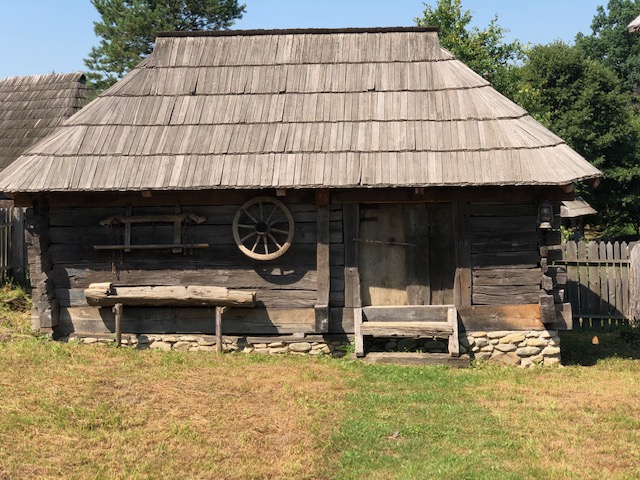
The Village Museum (Muzeul Satului) is an open-air ethnographic museum located in Bucharest’s Herăstrău Park. It displays traditional houses, farms, churches, and workshops brought from different regions of Romania, offering a vivid glimpse into rural life and folk architecture across the country. Strolling through the museum feels like stepping back in time, with each building telling stories of Romania’s diverse cultural heritage.
Visitor tips:
- The museum is family-friendly and great for all ages.
- Wear comfortable shoes for walking on uneven paths.
- It’s especially lively during traditional festivals and folk events held throughout the year.
- Located near Herăstrău Park, it’s a pleasant area to explore afterward.
🌿 Hidden Corners and Where else to Wander
Some of Bucharest’s best moments happen off the tourist trail. Think forgotten gardens, courtyard cafés, and antique shops where time lingers.
- Explore Cismigiu Park,
- peek inside the Stavropoleos Monastery, or get lost among the art galleries hidden in residential buildings.
- Victory Avenue (Calea Victoriei): A boulevard of contrasts — from Belle Époque grandeur to sleek shops.
- Carol Park: Perfect for slow mornings and leafy views.
- Cotroceni Neighborhood: Residential, peaceful, and full of understated charm.It has good restaurants.
Eat & Drink
Bucharest’s food scene mixes traditional Romanian comfort with a new wave of creativity. The food is bold, hearty, and full of flavor. If you want to try some Romanian traditional food, try sarmale (cabbage rolls) or ciorbă de burtă (sour tripe soup) if you’re feeling brave — or just stick to the pastries, like cozonac or a simple covrig grabbed from a street vendor. It’s comfort food that tells a story.
- Try Caru’ cu Bere for a theatrical take on classic dishes.
- For something quieter, head to Bazar, a local favorite set in a villa with a cozy garden.
- Coffee lovers shouldn’t miss Origo — a staple of the city’s third-wave coffee culture.
- Bucharest’s café culture is something else. Tucked behind buildings or spilling out onto sunny sidewalks, cafés here are meant for long hours — writing, people-watching, or simply existing. I lost an entire afternoon once in Cărturești Carusel, a spiral staircase of books and tea.
Art, Music & That Unmistakable Energy
What I love most about Bucharest is that it’s not trying too hard to impress. Artists create in repurposed warehouses. Musicians perform in underground venues. The city’s edge and elegance live side by side — and it owns both.
Bucharest is Not a Backdrop. It’s a Character.
Some cities are picturesque postcards. Bucharest is a story. Messy in places, glowing in others — and always alive with meaning. If you’re looking for something real, raw, and resilient, come here.
Have questions or want to share your favorite Bucharest spots? Leave a comment below — I’d love to hear your stories!
Bucharest is just one of many fascinating places that reveal Romania’s complex past. You can discover more iconic sites, cultural highlights, and travel recommendations on my Visit Romania page
Stay inspired: Subscribe here for more travel tips, stories, and hidden gems from Romania and beyond.






Leave a Reply